 MapEmbed SkyDoorMobile versionFacebook pageFeedback
Photos Pagoda Bridge
Information Pagoda Bridge
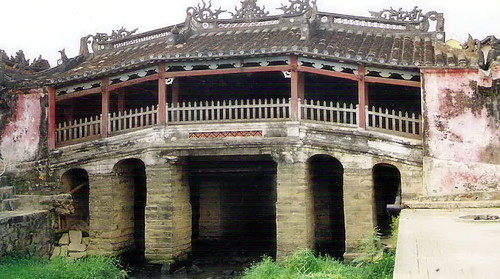
Photo by www.flickr.com/photos/nguyen_ngoc_chinh
Address: at neating point Tran Phu street and Nguyen Thi Minh Khai, Hoian. Pagoda Bridge is 18 meters along and 3 meters wide and its was built over the ditch which flows out to the Thu Bon River by Japanese traders in the early 17th century. This is a very distinctive architecture and a convergence of the typically cultural Asian styles. It was once called Pagoda Bridge because two sides of the bridge were whaped like two horizontally-located houses whose main doors were built by flowered enameled tile. Inside the windows, situated in the center of the bridge are large rooms used for worshiping as in a temple or pagoda.
In the year 1719, Nguyen Lord (Nguyen Phuc Chu) visited Hoian and renamed the bridge as Lai Vien Kieu, which means a bridge for passengers – by from far away. Lai Vien Bridge (Kieu means bridge) is the evidence of the golden time of Hoian Ancient Town for many centuries. It was once a busy international port and an residing place for Japanese, Chinese and Vietnamese communities from 17th to 18th centuries.
Pagoda Bridge has been famous for its unique and special architecture. On one bridge sie – the western end are a pair of wooden monkeys and a pair of wooden dogs guards indigo-blue ceramic incense burner on the eastern side. There are several explanations for these animal statues. One story claims that construction of the bridge began in the year of the Dog and finished in the year of the Monkey, wo the animal statues were built up for celebrating these events. Another ancient story said that a water monster – Cu resided in the ditch under the bridge. His head was in India while its tails in Japan and its back went across Hoian Town. Each time, the monster Cu woke up, floods happened and caused severe damages to human life and property. Therefore, the Japanese built the Pagoda Bridge strategic point to protect inhabitants from disasters and to help them live peacefully and prosperously. The Chinese worshiped the God “Bac De Tran Vu” right in the centre of the pagoda to exorcise water monsters based on their religious belief.
During the time and the ups and downs of history, Pagoda Bridge was downgraded and has been restored several times in 1763, 1817, 1865, 1917 and the latest rehabilitation was done in 1986. The Japanese Bridge or Pagoda Bridge has been regarded as the symbol of the ancient town and was licensed as a National Historical and Cultural Relic on 17th February 1990.
Source: www.hoianvietnamtour.com
| Post to FacebookPost to Twitter | Embed this place into your site |
Entries Pagoda Bridge
| Cau pagoda - Symbol of Hoi An |


